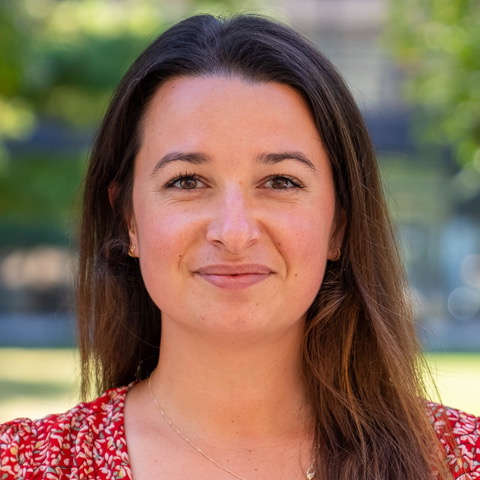

My name is Coralie Rousseau and I am currently an Eric and Wendy Schmidt AI in Science Postdoctoral Fellow, working closely with Dr Cathy Pfister (Ecology and Evolution department) and Dr Claire Donnat (Statistics department) at the University of Chicago. I received my Ph.D in microbiology (March 2025), supervised by Dr Simon Dittami and Dr Catherine Leblanc, at the Biological Station of Roscoff (Brittany, France) by studying ecological and functional roles of the microbial communities associated with the brown seaweed Ascophyllum nodosum.
Seaweeds harbor a rich microbial community, including bacteria, archaea, viruses, fungi, and other eukaryotes on their surfaces and within their tissues. The association between host and microbes forms a dynamic functional entity known as a holobiont. The microbial partners play a crucial role in seaweed health by producing bioactive compounds that are essential for normal morphology, development, and physiological acclimatization. Despite recent progress and increased interest, our understanding of the roles of these microbes in their host’s health remains limited, primarily due to the high dimensionality of the data, with thousands of features across relatively few samples. My postdoctoral project aims to address this challenge though three main objectives: first, to reduce data dimensionality in order to uncover hidden ecological states; second, to map microbial interactions and reveal emergent functional relationships within the holobiont; and third, to forecast shifts in microbial community structure and identify keystone species that disproportionately influence host health. Through the developed methods, this research will provide a foundation for deeper empirical investigations into the contribution of microbes to host health and resilience.
I would like to thank the Société Phycologique de France (SPF) for awarding me the grant that will enable me to present my postdoctoral work at the ISME20 congress from 16 to 21 August 2026.
